Discriminated ‘subsector’ of agriculture
 Farida Akhter || Sunday 03 May 2026 ||
WE OFTEN ignore the fact that the livestock and fisheries sector contributes significantly to the economy and, more importantly, to food and nutritional security. However, its importance is undermined by the government’s policymaking bodies and civil society, even though their day starts with at least an egg or two for breakfast and fish and meat for lunch and dinner and ends with a glass of milk. These are the foods that provide the required protein for people of different ages. For the children, these animal-protein-based foods are essential. At the national level, when we talk about food security, it often means an adequate supply of rice at an affordable price, along with vegetables, lentils, etc., coming from the crop sector. While these crop-based foods primarily address hunger and provide some nutrition, the protein requirement remains largely unmet. Despite such a need, the question of a regular supply of animal protein hardly gets attention, as if it would automatically jump on our dining plates. This is not a problem of the present day. None of the governments formed since the liberation of Bangladesh have been able to decide how to integrate agriculture with fisheries and livestock. This sector has always remained a sub-sector of agriculture.
The major policy question is why the fisheries and livestock sectors are a ‘sub-sector’ of the agriculture sector. These are related sectors, of course, and hence similar policy support would have been in place. But that is not the case. As subsector, fisheries and livestock do not enjoy the same status as agriculture in contributing to food and nutrition security. Agriculture without fisheries and livestock cannot ensure overall food security. It will only remain partial.
There has been discrimination in terms of policy support and importance given to the ministry. It is reflected in the national budget allocation. Out of the Tk 27,224 crore budget allocation to agriculture (2024-25), fisheries and livestock received only 3,392 crore (12 per cent). The combined contribution of fisheries and livestock to the national GDP is 4.31 per cent. On the other hand, the agricultural sector’s contribution to the national GDP is gradually declining; it now accounts for only 11 per cent of GDP (as of 2025). The fisheries and livestock sector contributes nearly half of the agriculture sector, and these sectors are growing. Logically, it should receive at least 50 per cent of the budget for agriculture. In terms of other policies and financial support, such as subsidies, there is unequal treatment.
Like other non-industrial countries, food production is not only about how many metric tonnes of food are produced; it is also about livelihoods, biodiversity, ecosystems, and social and economic relations with the means of production. So, fisheries and livestock must be seen as playing critical roles in food security and people’s livelihoods. Approximately 2 million, or 12 per cent of the total population, including 1.4 million women, make a living, directly or indirectly, in the fisheries sector and 14.5 per cent in the livestock sector. It is over a quarter of the total population that is engaged in these sectors. Unlike agriculture, these sectors also provide opportunities for the innumerable land-poor farmers and landless people to engage in self-employment. Poor, widowed, divorced, and other women raise cows or goats. Women’s contribution to both fisheries and livestock is enormous, especially in cattle and poultry rearing, fish, shrimp, crab culture, fish processing, net making, and other related works. Through these works, women earn income, ensure their families’ nutrition, and provide the community with eggs, meat, and milk. This issue often remains invisible in statistics and policy. Over 60 per cent of national animal protein consumption is met through livestock products. Fisheries, both aquaculture and captured fish, provide 67.80 per cent of the animal protein consumed by people (BBS, 2022).
The country needs to increase crop-based food production, as well as fish, egg, meat and milk production. Those who produce food in rural areas belong to the same communities: farmers, or krishok; fishers, or motshojibi; and those involved in poultry and cattle farming, or khamaries. None of these people benefits from complete policy support as food producers. Farmers receive subsidies for fertilisers and irrigation electricity and loans at a lower interest rate. But they do not get price support for their produce. Livestock khamaries get only subsidised vaccination services from the Department of Livestock, but that support too is inadequate due to lack of budget. Similarly, fishers get some food support during the fishing ban periods only. In the absence of government support, the market is controlled by a few big oligarchs of feed producers, day-old chicks, parent stock, fish fries, etc. The price is determined by them; small and medium producers have to depend on unfair market decisions.
For the newly elected government, this discussion on ‘subsector’ is necessary. The new government has adopted a policy of clustering ministers and state ministers across different ministries. Food, agriculture and fisheries and livestock are in one cluster led by a minister and a state minister. Although a state minister is assigned to the fisheries and livestock ministry, it may still suffer from discriminatory policy behaviours because the minister is in agriculture. Let me briefly give the main features of the fisheries and livestock sectors.
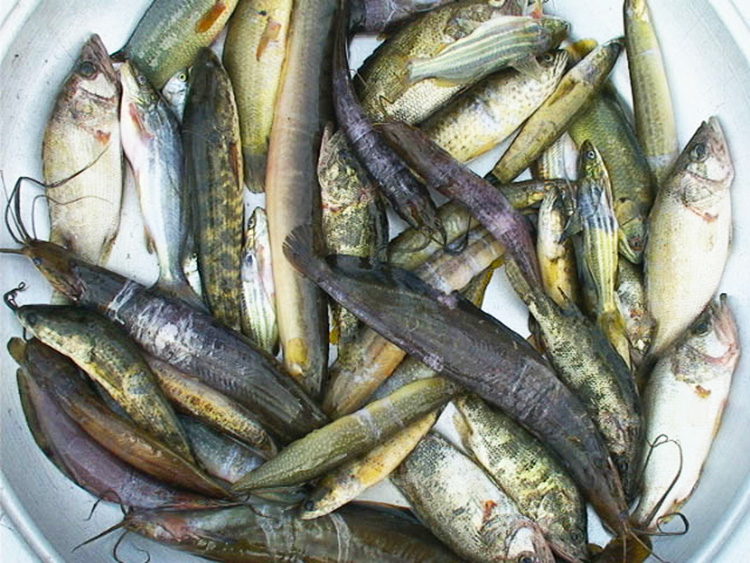
Bangladesh is a beautiful country with rich rivers, diverse water bodies, and wetlands, including haors, baors, beels, rivers, canals, and the ocean. The country produced about 50.18 lakh MT of fish (2023-24). Inland open water capture fish (or freshwater aquaculture) contributes about 14.12 lakh metric tonnes (28 per cent), and inland closed water culture produces 29.78 lakh metric tonnes (59 per cent), thereby placing the country as the fifth-largest fish producer (aquaculture) in the world and second in inland open water-captured fish. Marine fisheries contribute a smaller percentage, 12.53 per cent (6.28 metric tonnes), of the captured fish but are still a valuable part of the overall fish supply. Inland fisheries are diverse across water bodies, varying by geographical location within the country. Besides the rivers and canals, there are estuaries, haors, baors, beels, brackish water, etc., which provide a wide range of local species of fish called ‘deshi mach’. There are 260 fish and 24 prawn species in the country’s inland freshwater. Over 2.85 lakh fishers follow the natural reproduction cycle of fish and do not require any input or external feed. About 600 baors, or oxbow lakes, are found in the southwestern part of Bangladesh, within the Ganges Delta region. Aquaculture primarily produces carp through semi-intensive and intensive cultivation practices in fresh and brackish water. Carp fish, such as Rui, Katla, Pangas, and Pabda, are now available in the market at an affordable price.
Bangladesh has a total of 118,813 square kilometres of water area, including the exclusive economic zone in the Bay of Bengal, with huge but unexplored potential. Marine fisheries constitute only 36 per cent of the EEZ. There are about 475 species of fish, 36 species of shrimp, 15 species of crabs, 11 species of dolphins, 56 species of seaweeds, and 13 species of corals.
If Bangladesh is known globally for any fish, it is for Hilsa (Tenualosa ilisha), found in both rivers and the sea; it contributes singularly 12 per cent of the national fish catch and 1 per cent to the national GDP. It is the most essential commercial transboundary species of the Bay of Bengal, with Bangladesh enjoying a significant share (86 per cent) and ranking first in global catch. Approximately 7 lakh fishers are engaged in hilsha fishing, and over 25 lakh are involved in post-harvest activities. The yearly catch of Hilsha is approximately 5.29 lakh metric tonnes. Hilsa is recognised as a GI (Geographical Indication) product, signifying that Hilsa, particularly the Padma variety, is uniquely associated with Bangladesh and its geographical origin. The Hilsha fishers require support through low-interest loans, as they face a capital shortage for trawler/boat fishing and are forced to rely on the exploitative ‘Dadon’ system. But have enough measures been taken to preserve and to enhance the conditions for Hilsha production? The answer is a resounding no.
Shrimp, once known as ‘white gold’, has been a significant export earner since the early 1970s, with foreign exchange earnings rising from USD 2.9 million to a peak of USD 590 million. But now it has lost foreign markets, and not enough attention has been paid to improving the situation.
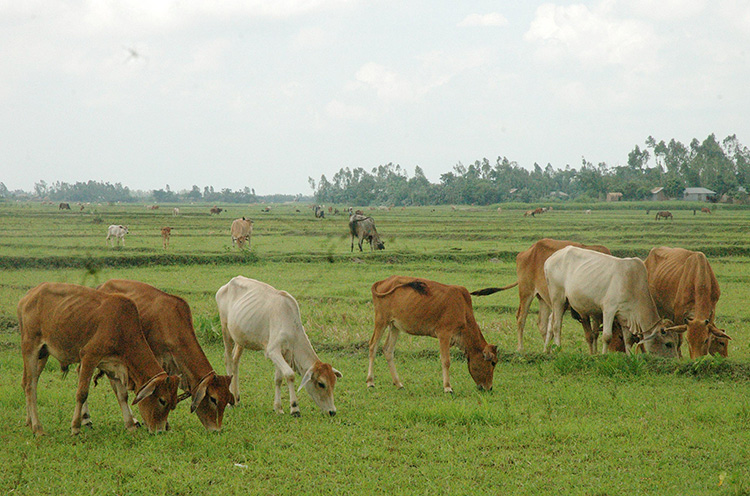
Bangladesh has a high density of small and large ruminants and poultry birds. These include 2.5 crore cattle, 15.3 lakh buffaloes, 2.72 crore goats, 39.81 lakh sheep, 7.6 crore ducks, and 33.61 crore chickens. About 15 lakh households, mostly poor and landless women, raise cattle, sheep, goats and buffaloes. There are 278,000 cattle farms and 868,000 goat and sheep farms, mainly developed as entrepreneurial ventures. Women account for 40% of total employment in the poultry sector. The annual production of milk is 155.38 lakh metric tonnes, meat 89.54 metric tonnes, and 2440 crore eggs. Small ruminants such as goats and sheep rearing contribute 19% of meat (mutton) production.
Backyard poultry accounts for 40 per cent of the country’s poultry population in semi-scavenging/traditional rural backyard conditions. This system comprises indigenous genetic resources and crossbred birds and is a low-input, low-output system. Eggs and meat from backyard poultry have a better market demand than those from commercial layer and broiler chickens and their products. Milk and meat from desi breeds of cows, goats, sheep, and buffalo are abundant in the market.
Undoubtedly, poultry production has contributed to per capita meat consumption (12.50 kg/year) and egg consumption (136 eggs/year) among ordinary people. The share of poultry meat out of total meat consumption is 40-42 per cent. The urban poor people, particularly the RMG workers, consume broiler poultry meat and eggs, ensuring their nutrition through animal protein.
The livestock sector must address disease outbreaks, which require vaccines and animal drugs. The Department of Livestock Services has been providing animal health services throughout the country by its infrastructural facility and resource persons. The Livestock Research Institute in Mohakhali, Dhaka, along with the Biologics and Applied Research Centre in Cumilla, is actively engaged in the year-round production of vaccines for livestock and poultry. Together, these institutes produce 17 types of vaccines targeting various infectious diseases, including foot-and-mouth disease, peste des petits ruminants, lumpy skin disease, anthrax, Newcastle disease, Gumboro, etc. To safeguard against significant economic and zoonotic diseases and minimise associated risks, a total of 325.10 million doses of vaccines for livestock and poultry were produced and administered during the fiscal year 2023-24 as a part of government initiatives. In an effort to prevent and control transboundary animal diseases, 24 quarantine stations (border posts) have been established at airports, seaports, and land ports.
Mortality or loss of productivity due to various endemic, economic and emerging diseases has been a major constraint in the growth of livestock. The livestock disease control programme relies on effective disease strategy/programmes, including surveillance and early warning, preventive vaccination, implementation of good livestock farming practices, and effective monitoring and veterinary regulations. In the absence of an adequate disease control programme and preventive measures, farmers rely on intensive medication, which, in turn, contributes to a broader public health problem of antimicrobial resistance. Many of the livestock diseases are transboundary in nature, and their prevalence can hinder the prospect of export of livestock products.
Eid-ul-Adha is the most important religious celebration for Muslims, which involves the ritual slaughtering of cattle, including cows, goats, sheep, buffaloes, and other permissible animals. The Department of Livestock Services supports marginalised farmers in raising local breed cattle for safer production and to avoid the use of harmful steroids, hormones, antibiotics, and other chemicals in the name of fattening.
Pet animal practice has grown remarkably in recent years among the urban population, reflecting the increasing awareness of animal companionship and welfare. Dogs, cats, rabbits, and birds as pets have become cherished members of many households, driving a significant increase in demand for quality veterinary services. These growing practices are firmly supported by the Bangladesh Animal Welfare Act, 2019, a landmark step towards ensuring humane treatment and protection of animals across the country.
There are still broader policy reform issues that needed to be considered:
Unequal interest rates for credit facilities: Small-scale fish and livestock farms lack access to institutional credit facilities, such as banks or financial lending institutions; therefore, they are forced to borrow from the informal sector, including Mahajons or moneylenders, through a traditional informal lending system known as Dadon. The Micro-credit Regulatory Authority Act, 2006, prohibits unauthorised individuals. The ministry of fisheries and livestock has proposed setting up a specialised bank, the Fisheries and Livestock Development Bank, and has already applied to the Financial Institution Department of the ministry of finance, which has been forwarded to the Bangladesh Bank for approval.
Animal and fish feed: About 6 million metric tonnes of poultry and dairy animal feed are produced by 338 registered feed mills. The quality control of the feed is monitored in accordance with the Fish Feed and Animal Feed Act, 2010, and the Animal Feed Rules, 2013. The ingredients are plant-based, including soybean meal, rice bran, and oil cakes, while animal-based ingredients such as fish meal, fish solubles, and other by-products are imported. This poses a risk of importing contaminated GM food or low-grade ingredients.
Leasing out (Ijara) the water bodies: The water bodies are the primary sources of livelihood for the fishing communities living adjacent to them. But they do not have any control over these, nor does the ministry. The ministry of land manages and leases out government-owned water bodies, known as Jalmahals, to generate revenue. However, fisheries laws governing Jalmahals aim to strike a balance between resource use and conservation. The Jalmahal Policy (2009) emphasises leasing out to genuine fishermen cooperatives for collective management. But, in practice, the leasing of Jalmahals is taken over by non-fishers who have the capital to invest in government leasing. They use the Jalmahals for non-fishing purposes, destroy fish, and deprive the fishers.
Pesticide use in agriculture and industrial pollution: The indiscriminate use of pesticides for agricultural production has been contaminating water bodies, rivers, canals, and open fields. This has a direct impact on fish availability and affects grazing fields for cows and goats. In the Haor areas alone, a very crucial area for local fish varieties, about 11,000 metric tonnes of pesticides are used per year, according to the Department of Agriculture. Almost 25% of the pesticides used in agricultural fields washed into nearby water bodies, including rivers, and about 15-20 per cent of the residual effects were found in fish. The WHO has classified pesticides (2019) as extremely hazardous (Ia), highly hazardous (Ib), combinedly known as HHPs; moderately hazardous (II); slightly hazardous (III); and unlikely to present acute hazard (U). In the Haors, over 34 most hazardous pesticides, 44 medium-hazard pesticides and 90 low-hazard pesticides are used. Hazardous pesticides persist for a long time in soil and water; some bind to heavy metals to form chelates and enter the food chain. Not only are fisheries affected, but 45 per cent of cattle grazing in open fields are also exposed to pesticides sprayed in agricultural fields. Pesticide residues are entering the ecosystem and thereby the human food chain.
Strengthening livestock disease control and surveillance systems: Upgrading the existing epidemiology cell into a full-fledged epidemiology institute with district-level networks, mainstreaming the Field Epidemiology Training Program, and advancing the Bangladesh Animal Health Intelligence System into a comprehensive early warning system will improve timely disease detection, risk assessment, and evidence-based decision-making, ultimately reducing disease burden and safeguarding livestock productivity and public health.
Enhancing vaccination programmes and strengthening veterinary public health: To sustain and expand successful disease-control efforts, the Department of Livestock Services should prioritise modernising vaccine production by establishing a new, bio-secure manufacturing facility with advanced technology, potentially through public-private partnerships. Government-led mass vaccination programmes providing free vaccines for priority diseases such as PPR, FMD, and lumpy skin disease are essential to protect small-scale and subsistence farmers. Additionally, a veterinary vaccine testing laboratory should be established to ensure the quality and safety of both locally produced and imported vaccines. In conjunction with vaccination efforts, DLS must shift its focus from primarily treating sick animals to emphasising disease prevention and veterinary public health.
Economic and strategic vision: With increasing global demand for sustainable seafood and traceable products, Bangladesh has the potential to become a regional export hub — especially if cold chain logistics, port infrastructure, and sanitary standards are upgraded.
With appropriate national policy reforms and targeted investments, the sector can flourish and simultaneously ensure nutritional security, promote rural employment, conserve biodiversity, and generate foreign exchange earnings, thereby transforming the country’s food system and economic landscape. But keeping it as a ‘subsector’ with policy discrimination will result in broader gains in food production being lost.
Let us change the perspective of the policymakers.
Farida Akhter is executive director of UBINIG (Policy Research for Development Alternative) and former adviser to the fisheries and livestock ministry of the interim government.
Published: Newage: 25 March, 2026; (Discriminated ‘subsector’ of agriculture)